In coastal and inland microclimates, the same vinyl flooring system can behave in surprisingly different ways. This becomes especially clear when comparing conditions in Khalifa City and Saadiyat Island. While both areas share the broader hot desert climate of Abu Dhabi, the dominant environmental stressors are not the same.
In Khalifa City, fine airborne sand is the primary challenge. Constant dust infiltration can act as an abrasive agent on vinyl surfaces, gradually dulling protective wear layers and increasing the need for frequent cleaning to prevent micro-scratching. Indoor-outdoor transitions also tend to carry more particulate load, which places additional stress on seams and edge sealing.
In contrast, Saadiyat Island is heavily influenced by salt-laden coastal air. Here, the concern shifts from abrasion to chemical and moisture-related wear. Salt particles can accelerate degradation of adhesives, affect subfloor bonding over time, and intensify expansion-contraction cycles due to higher humidity exposure. As a result, maintenance strategies and installation detailing must be adapted to each environment, even when using the same vinyl product line.
Abrasion patterns from fine desert sand entering via shoes
Fine desert sand acts like a constant micro-abrasive rather than a single-point scratch source. Once it enters on footwear, it spreads evenly across walking paths and creates a “frosted” wear pattern on vinyl surfaces—typically dulling high-traffic lanes rather than producing deep gouges. Over time, this leads to visible path tracking from entrances to kitchens, corridors, and balconies. The effect is strongest where sand gets repeatedly ground into the same directional traffic routes, especially near entry points.
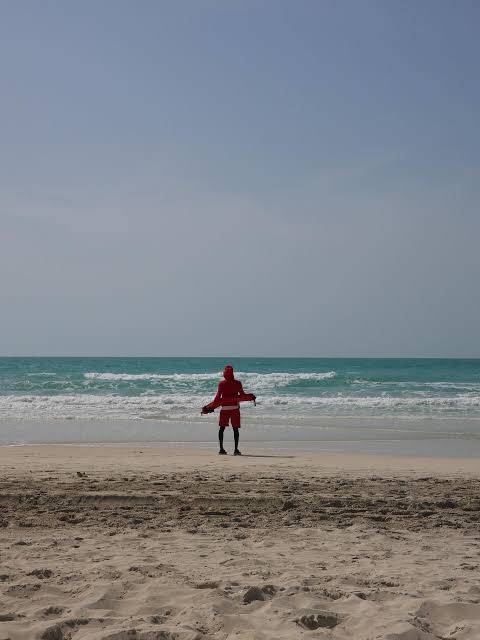
Corrosion effects of salt mist on vinyl locking mechanisms
While vinyl planks themselves are polymer-based and not prone to rust, locking systems often include mineral-filled cores or embedded metal elements in some hybrid systems. In coastal environments, salt mist can accelerate degradation of these components and weaken joint integrity over time. More commonly, salt contamination increases friction at click joints, making disassembly or replacement more difficult. In areas near the coast—such as Abu Dhabi Corniche—this combination of salt and humidity is a key factor in long-term flooring performance.
Cleaning frequency differences between inland and coastal Abu Dhabi
Coastal homes typically require more frequent cleaning cycles due to continuous salt deposition, higher humidity levels, and fine airborne particles carried from the sea. Salt crystals can settle invisibly on flooring surfaces and, over time, become mildly abrasive when stepped on, gradually affecting the finish and overall appearance.
In such environments, routine maintenance is not only about visible dirt but also about preventing microscopic residue buildup that can dull surfaces and compromise long-term performance. Inland properties, on the other hand, are generally exposed to higher levels of dry dust but significantly less corrosive residue.
As a result, cleaning practices in these areas tend to focus more on straightforward particle removal rather than managing chemical or saline buildup. Overall, coastal environments demand a more balanced approach that includes frequent wet cleaning, controlled moisture use, and careful drying techniques to ensure surfaces remain protected, visually consistent, and free from salt-related wear effects.
Which wear layer formulations resist both sand and salt exposure
The most effective wear layers against combined sand abrasion and salt exposure are dense, high-performance polyurethane systems often reinforced with ceramic or aluminum oxide particles. These formulations improve surface hardness while maintaining flexibility to resist micro-cracking under repeated abrasion. A well-balanced wear layer must resist scratching from grit while also preventing chemical dulling from salt residue, which can etch or haze softer finishes over time.
How balcony vinyl fails faster in coastal units than inland ones
Balcony-adjacent vinyl flooring tends to deteriorate more quickly in coastal residential units due to a combined exposure to UV radiation, wind-driven salt particles, and continuous moisture cycling. Even when the flooring is not directly exposed to rainfall, salt-laden air frequently enters through open or partially open balcony doors and gradually settles on interior surfaces.
Over time, this invisible accumulation accelerates surface dulling, creates a thin abrasive layer, and can subtly degrade the protective wear layer of the vinyl. In addition, repeated fluctuations in humidity near balcony zones encourage slight expansion and contraction movements, which may weaken seams and edge joints if installation detailing is not carefully executed.
In contrast, inland units are generally shielded from marine atmospheric conditions, experiencing far lower levels of salt exposure and moisture fluctuation. While dust remains the primary environmental factor, it does not chemically interact with flooring materials in the same way. As a result, maintenance in inland properties is typically focused on routine particle removal rather than managing corrosive buildup or moisture-related stress.
This difference in environmental load means that identical vinyl flooring systems often retain their appearance and structural stability for longer periods in inland settings compared to coastal balcony-adjacent installations, where environmental stressors are significantly more aggressive and continuous.
Subfloor contamination risks from tracked-in sand mixed with humidity
When fine sand mixes with humidity, it can become slightly cohesive and settle into micro-gaps in the subfloor. Over time, this creates abrasive layers beneath flooring systems that can affect click joints or adhesive bonding. In extreme cases, trapped sand can act as a grinding medium during floor movement cycles, accelerating wear from below. Proper entryway mat systems and sealing strategies are critical in sand-prone environments.
Protective coatings applicable to vinyl near beachfront windows
Near beachfront-facing glazing, vinyl flooring benefits from UV-stabilized wear layers and surface coatings designed to resist both oxidation and salt deposition. These coatings help prevent surface haze and discoloration caused by continuous exposure to marine air. In premium installations, additional protective films or maintenance coatings may be used to extend gloss retention and reduce micro-scratching from airborne particles entering through window openings.
Seasonal threats: March dust storms vs October humidity spikes
March typically brings fine airborne dust storms that increase abrasive loading on floors, while October often introduces higher humidity levels that affect material expansion and surface residue behavior. Dust storms primarily cause mechanical wear, while humidity spikes influence moisture absorption, joint movement, and cleaning difficulty. Flooring systems in regions like the UAE must be designed to handle both dry abrasion and moist environmental stress within the same annual cycle.
Warranty considerations for homes within 200m of the coast
Many flooring warranties include specific environmental exclusions related to coastal exposure, particularly in regions where salt-laden air, elevated humidity, and proximity to seawater create accelerated wear conditions. In many cases, manufacturers clearly define thresholds beyond which standard warranty coverage is reduced or voided, especially when surface wear, discoloration, or joint separation is attributed to environmental stress rather than material or production defects.
Properties located in close proximity to shorelines are often categorized as high-exposure zones, where continuous salt deposition and moisture cycling can significantly impact flooring performance over time. In these settings, even properly installed products may experience faster aesthetic aging or adhesive fatigue due to external conditions that fall outside controlled testing environments.
This is especially relevant in modern coastal developments where buildings are directly facing the sea or separated only by open promenades, allowing uninterrupted exposure to marine air. As a result, installers and property owners are often advised to review warranty documentation carefully and ensure that product selection, installation methods, and maintenance routines are fully aligned with coastal-use specifications to avoid unexpected limitations in coverage.
Frequently Asked Questions
Does regular sweeping with a broom damage vinyl in sandy areas?
Yes if broom bristles are stiff; use microfiber dust mop and change head monthly.
How can I tell if salt air is damaging my vinyl click locks?
White powdery residue at joints and difficulty snapping new planks during repair.
Is luxury vinyl tile (LVT) suitable for a beachfront villa in Saadiyat?
Yes if you choose marine-grade core and re-seal perimeter edges every 18 months.
How many years does vinyl last in Khalifa City’s dry sand environment?
12-15 years with proper maintenance, compared to 7-9 years on Saadiyat Island.
Can I pressure wash outdoor vinyl balcony flooring in Abu Dhabi?
No; use soft broom and pH-neutral cleaner only; pressure forces sand into joints.
What entry matting system best protects vinyl from sand and salt?
Three-stage: scraper mat outside, coir mat inside, soft mat at living room threshold.
Does sand cause micro-scratches that eventually ruin the printed layer?
Yes after 5-7 years of daily sand exposure; refinishing not possible on most vinyl.
Are dark-colored vinyl floors worse for showing salt residue marks?
Yes, salt dries white on dark floors; medium brown or grey tones are most forgiving.
How do I deep-clean vinyl that has sand embedded in the surface texture?
Use soft bristle brush attachment on vacuum, then damp mop with mixture of water and vinegar.