
In compact powder rooms across Dubai, every design decision plays a crucial role in shaping the sense of space, style, and functionality. Patterned vinyl flooring has emerged as a highly effective solution for these small yet visually important interiors, offering a blend of practicality and decorative impact. Unlike plain finishes, patterned vinyl introduces visual movement and character, helping to transform confined areas into more dynamic and expressive spaces without overwhelming them.
Beyond aesthetics, modern vinyl flooring is engineered to perform well in moisture-prone environments, making it particularly suitable for powder rooms where humidity and frequent use are common. Its water-resistant surface, combined with easy maintenance and comfort underfoot, makes it a practical alternative to traditional tile or stone. In addition, the wide range of geometric, floral, and contemporary patterns allows homeowners and designers in Dubai to tailor the flooring to both minimalist and luxury-inspired interiors.
As urban living spaces continue to prioritize smart design solutions, patterned vinyl flooring stands out as a versatile option that balances durability, elegance, and spatial enhancement—especially in small powder rooms where first impressions matter most.
Visual expansion tricks using small-scale geometric patterns
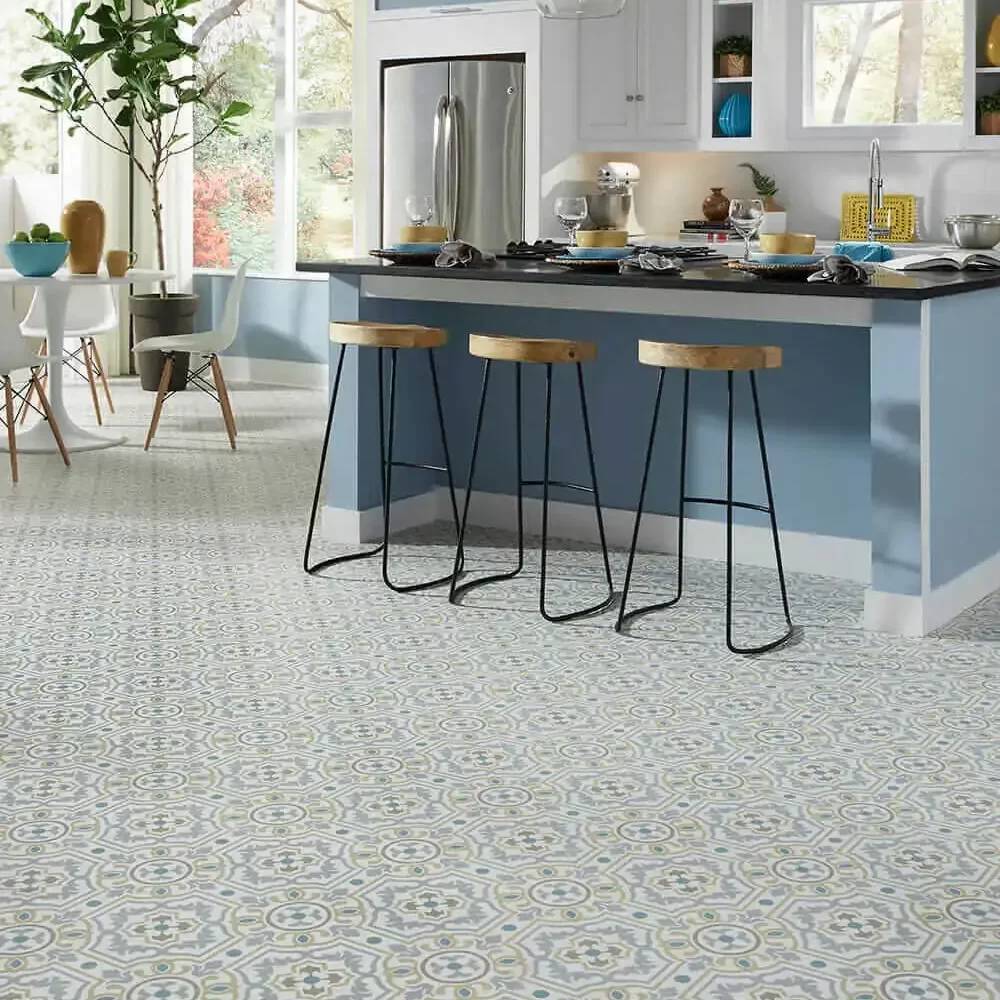
Small-scale geometric patterns work by manipulating how the eye reads repetition. In tight spaces like powder rooms, the brain tends to interpret fine, consistent patterns as a continuous surface rather than individual tiles or planks. This reduces visual segmentation and makes the room feel more unified—and therefore larger.
The key is low-contrast repetition: patterns that are visible up close but soften at viewing distance. High contrast micro-patterns can instead create visual “noise,” which compresses the perceived space.
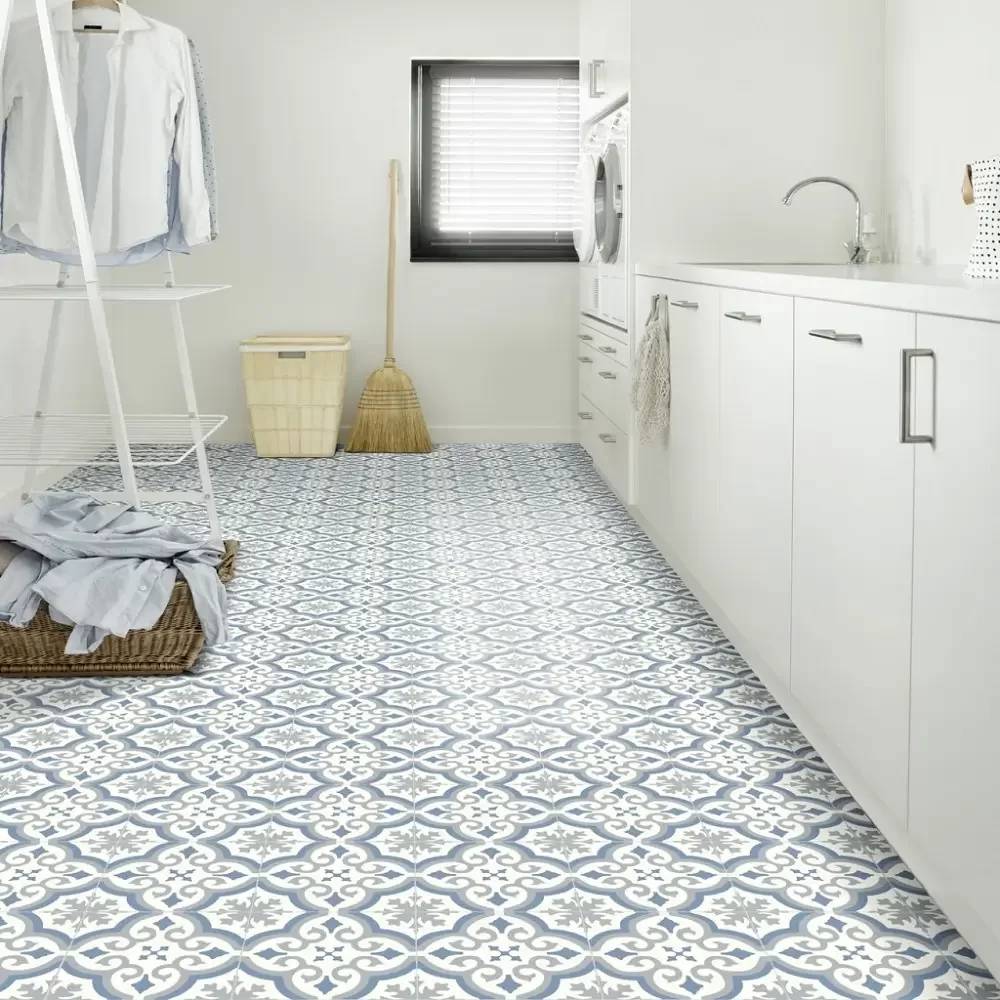
How diagonal pattern installation makes square powder rooms feel larger
Diagonal installation breaks the rigid alignment of square rooms. Instead of reinforcing the room’s boundaries, it redirects the eye along longer visual lines.
In a typical square powder room:
- Straight layouts emphasize walls → feel boxy
- Diagonal layouts create perceived width/length extension
The result is a subtle optical illusion where the floor appears larger than its actual footprint, especially when paired with continuous wall finishes.
Matching vinyl pattern direction with vanity mirror placement
Mirror placement amplifies floor direction. When pattern direction aligns with mirror reflections:
- Visual depth increases
- Repetition appears extended into reflected space
- Symmetry feels more intentional
If misaligned, reflections can create visual “breaks” that reduce spatial harmony. In small bathrooms, coordination between floor direction and mirror axis is more important than the pattern itself.
Contrast thresholds for patterned floors with busy wallpapers
When both floor and walls are patterned, the main risk is visual overload. The safe approach is controlling contrast hierarchy:
- If walls are busy → floors should be low contrast
- If floors are patterned → walls should be visually calm
The eye needs a “dominant surface.” Without it, the room feels smaller and more fragmented rather than designed.
Moisture resistance of printed patterns vs embossed-in-register textures
Pattern durability depends on how the design is applied:
- Printed layers: rely on protective wear layer; vulnerable if that layer is damaged
- Embossed-in-register (EIR): pattern is physically aligned with texture, so wear is more realistic and less prone to visual degradation
Moisture resistance itself is not determined by the pattern method but by the core and sealing system. However, worn printed layers tend to show damage more visibly in wet zones.
Pattern scaling: large motifs vs micro-geometrics for 2m² rooms
For very small rooms:
- Micro-geometric patterns: expand perceived space, reduce visual interruption
- Large motifs: can overwhelm and make the room feel segmented
In 2m² powder rooms, large-scale patterns often become the dominant visual element, which can unintentionally compress the space.
How grout line simulation patterns hide installation seams
Vinyl designed to mimic tile often includes printed or embossed “grout lines.” These can:
- Mask minor seam misalignment
- Break up visual continuity at plank joints
- Reduce visibility of installation transitions
However, if real seams do not align with simulated grout spacing, the illusion can break and make imperfections more noticeable.
Cleaning challenges specific to textured patterned vinyl
Patterned and textured vinyl flooring introduces subtle micro-recesses that can influence everyday maintenance performance in wet or high-use areas. These small surface variations tend to trap fine dust, lint, and soap residue more easily than completely smooth finishes, which means edges and textured grooves may require more frequent and targeted cleaning to maintain a uniform appearance.
Over time, if improper mopping techniques are used—such as excess water, harsh detergents, or uneven drying—these surfaces can also develop patchy or uneven sheen levels that reduce visual consistency. In contrast, glossy and smooth vinyl surfaces are generally easier to wipe clean because dirt and moisture remain on the surface rather than settling into texture. However, this same smoothness can make minor scratches, scuffs, and wear patterns more visible under strong lighting.
As a result, homeowners and designers often face a practical trade-off: textured and patterned vinyl offers better concealment of everyday wear but demands more attentive maintenance, while smooth finishes prioritize ease of cleaning but may reveal imperfections more readily over time.
Resale value impact of bold patterns vs neutral powder room floors
In resale terms:
- Neutral patterns: broadly appealing, safer for future buyers, easier to re-style
- Bold patterns: can add character but risk limiting buyer preference
In small spaces like powder rooms, bold flooring can be acceptable if balanced with neutral walls—but overly specific design choices may reduce perceived flexibility during resale evaluations, especially in standardized apartment markets like Dubai Marina.
Frequently Asked Questions
Does patterned vinyl show dirt less than solid color in a powder room?
Yes, complex patterns hide water spots, dust, and footprints much better than solids.
Can I use large floral pattern vinyl in a 1.5m x 2m powder room?
No, overwhelming; choose pattern elements under 10cm or micro-geometric for small spaces.
Will patterned vinyl clash with my existing marble vanity countertop?
Choose patterns with one neutral color matching marble; avoid patterns with multiple contrasting colors.
Is patterned vinyl more slippery than solid when wet?
Not if pattern has texture; printed-only patterns without embossing can be dangerously slick.
How do I clean a heavily textured patterned vinyl in a powder room?
Soft brush attachment on vacuum weekly; damp sponge into grooves monthly; never over-wet.
Does patterned vinyl require more precise cutting around toilet bases?
Yes; pattern mismatch at toilet flange is highly visible; professional installation recommended.
Can I install patterned vinyl planks in herringbone layout for a powder room?
Technically yes but waste exceeds 30% for small rooms; only for high-end projects.
What pattern best hides the seam between two vinyl planks in a tiny room?
Random stone or terrazzo patterns; avoid wood grain or straight-line patterns in rooms under 3m².
How long does patterned vinyl last compared to solid in a guest powder room?
Same lifespan; pattern wear is cosmetic; heavy foot traffic after parties will show wear same as solid.