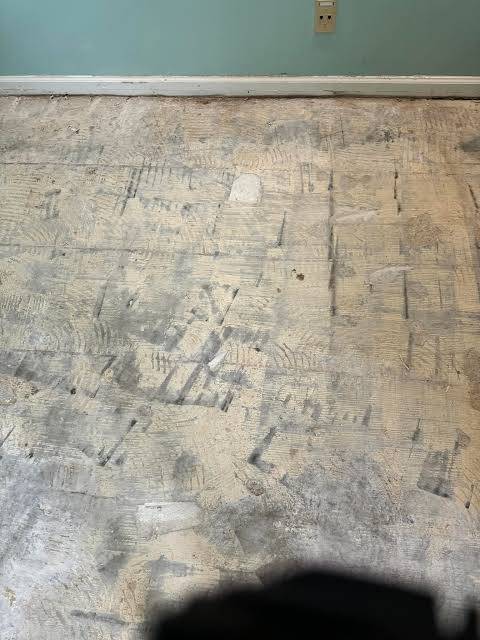
Removing old vinyl adhesive from a concrete subfloor is a critical preparation step before installing any new flooring system. Over time, adhesive residues can harden, become uneven, and create surface irregularities that directly affect the performance and appearance of the new floor.
If not properly removed, these remnants may prevent proper bonding, lead to visible bumps, or even cause premature flooring failure. In modern renovation projects, especially in residential and commercial spaces, achieving a perfectly clean and smooth concrete surface ensures maximum durability and long-term stability of the new installation.
The process typically involves mechanical grinding, chemical adhesive removers, or a combination of both, depending on the adhesive type and condition of the slab. Proper preparation not only improves adhesion but also enhances the overall finish quality, making it an essential foundation step for any successful flooring upgrade.
Chemical adhesive removers approved for Dubai indoor air quality standards
In indoor renovation work, especially in occupied or partially occupied buildings, adhesive removers must meet low-VOC (volatile organic compound) requirements to avoid compromising indoor air quality. Products labeled as low-emission or compliant with green building standards are typically preferred in regulated environments in the UAE.
In practice, contractors avoid aggressive solvent-based removers indoors unless there is strong ventilation control. Water-based or citrus-based formulations are often used for softer mastics, while industrial-grade removers are reserved for controlled demolition zones.
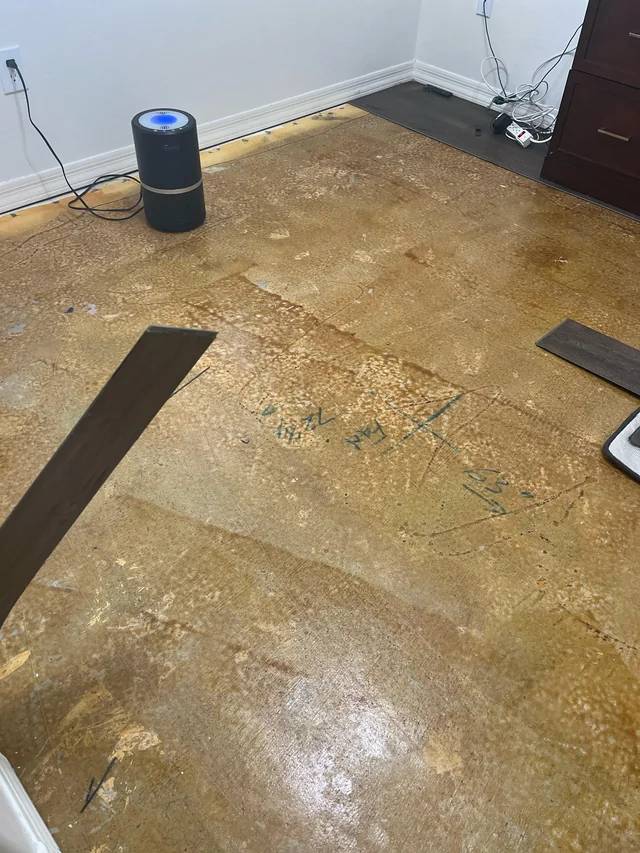
Mechanical scraping methods that don’t damage concrete surface
Mechanical scraping is effective for removing residual adhesives but must be carefully controlled to avoid gouging or weakening the concrete substrate. The key is using sharp blades at shallow angles rather than aggressive chiseling.
Rotary scrapers with adjustable depth settings are often preferred because they remove adhesive layers without cutting into the slab. The goal is always to preserve the flatness of the subfloor, since damage at this stage will affect all subsequent flooring installations.
How heat guns soften old mastic without toxic fumes
Heat guns are used to soften aged adhesive (mastic) so it can be scraped more easily. When properly controlled, they reduce the need for chemical solvents. However, overheating must be avoided because it can release fumes or cause partial combustion of degraded adhesives.
The process relies on controlled softening rather than burning, allowing the material to become pliable enough for safe removal. Ventilation is still important, even when chemical use is minimized.
Identifying asbestos-containing adhesives in pre-2000s Dubai buildings
In older buildings constructed before modern material regulations, some adhesives may contain asbestos fibers, particularly in vinyl tile mastics or backing compounds. Visual identification is not reliable, so laboratory testing is required for confirmation.
Suspected materials should never be mechanically disturbed until tested. If asbestos is confirmed, removal must follow strict containment and licensed abatement procedures to prevent airborne fiber release.
Wet scraping technique to control dust from old glue residue
Wet scraping is a controlled method used to remove old adhesive residues from concrete surfaces by lightly moistening the material before scraping. This approach helps suppress dust generation during the removal process, significantly improving air quality and enhancing safety for workers, particularly in enclosed residential or commercial interiors where ventilation may be limited.
By reducing airborne particles, wet scraping also minimizes cleanup time and prevents fine dust from spreading to adjacent areas. However, careful control of moisture levels is essential. Excessive water application can penetrate the porous structure of concrete, potentially weakening its surface integrity and delaying the proper bonding of new flooring systems.
For this reason, professionals typically rely on a balanced technique that combines light dampening with manual scraping tools to ensure effective adhesive removal without compromising the substrate. This controlled method provides both efficiency and surface protection, making it a preferred practice in modern flooring preparation work.
Do-it-yourself vs professional remediation for large villa areas
Small areas of adhesive removal can sometimes be managed with DIY methods, but large villa projects require professional equipment and containment systems. Professionals use industrial grinders with dust extraction and controlled chemical systems that ensure even substrate preparation. In large areas, inconsistency in removal depth or surface flatness can lead to long-term flooring failures, making professional intervention more reliable.
How leftover adhesive affects new vinyl’s locking system performance
Residual adhesive left on a subfloor can significantly compromise the performance of click-lock vinyl flooring systems. Even thin or uneven layers create subtle high and low spots that prevent full, uniform contact between the plank and the substrate. This lack of consistent support often results in micro-movement underfoot, which users may perceive as hollow sounds or slight flexing during daily use.
Over time, this repeated movement can place unnecessary stress on the locking mechanisms, increasing the risk of joint separation or failure, particularly in rigid-core vinyl systems that depend on precise interlocking stability. Additionally, adhesive contamination can interfere with the proper engagement of the click system, reducing installation accuracy and long-term durability.
For these reasons, achieving a clean, smooth, and fully prepared concrete surface is essential before installation. Proper substrate preparation not only ensures structural integrity but also enhances acoustic comfort and extends the overall lifespan of the flooring system.
Subfloor priming requirements after adhesive residue removal
After adhesive removal, priming is often required to stabilize the concrete surface and improve bonding performance for new installations. Primers help seal porosity, reduce dusting, and create a uniform absorption profile. Without priming, remaining micro-contaminants can weaken adhesion or cause uneven curing of leveling compounds. Proper primer selection depends on the type of flooring system being installed afterward.
Disposal regulations for old adhesive waste in Abu Dhabi
In regulated environments such as Abu Dhabi, the disposal of old adhesive waste is subject to strict environmental and safety regulations to minimize ecological and health risks. Materials removed during flooring preparation are typically classified according to their chemical composition, with particular attention given to whether they contain solvents, plasticizers, or other potentially hazardous compounds.
Once classified, the waste must be segregated on-site to prevent cross-contamination with general construction debris. Liquids, chemical strippers, and contaminated residues are handled separately from inert materials such as concrete dust or dry adhesive flakes. After segregation, all waste is transported only through licensed carriers to approved treatment or disposal facilities in accordance with local environmental authority requirements.
These procedures are designed to ensure safe containment of potentially toxic substances, reduce improper dumping risks, and maintain environmental protection standards. Strict compliance is essential in renovation and demolition projects, particularly in high-density urban developments where environmental impact control is closely monitored.
Frequently Asked Questions
How can I tell if my old vinyl glue contains asbestos?
Only lab testing; assume yes if building built before 2000 and glue is black or dark brown.
Is it safe to grind old adhesive off concrete indoors without full containment?
No; creates airborne dust that spreads throughout apartment; professional only.
Can I install new vinyl directly over old dried adhesive residue?
Yes if residue is thin, flat, and fully dry; no if residue is soft, oily, or more than 2mm tall.
What household chemical softens old vinyl glue for scraping?
None safely; use commercial mastic remover or heat gun; avoid acetone indoors.
How long does chemical adhesive remover off-gas in an apartment?
24-72 hours with ventilation; sensitive individuals should wait 5-7 days.
Do I need to remove old glue from the entire apartment or just high areas?
Entire area; thickness variations of even 1mm cause new vinyl joint failure.
What is the fastest way to remove old adhesive from a 50m² concrete slab?
Dual-disc planetary grinder with diamond tooling and industrial vacuum.
Can old adhesive residue damage my new vinyl’s locking system over time?
Yes, soft residue allows plank movement; hard lumps cause pressure ridges.
How do I properly dispose of adhesive waste from my Abu Dhabi villa?
Double-bag in heavy plastic, label as “construction waste”, take to designated landfill.