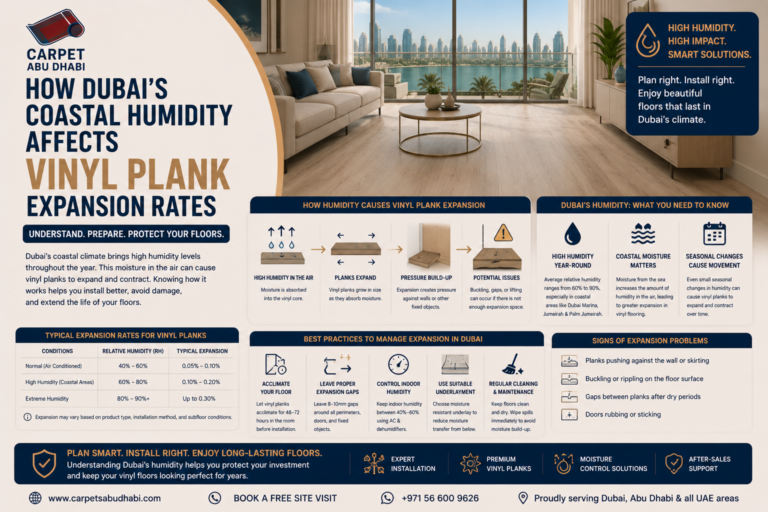
In nurseries across Dubai, flooring plays a crucial role in creating a safe, comfortable, and development-friendly environment for young children. Kid-friendly vinyl flooring has become one of the most preferred solutions due to its strong balance of safety, durability, and ease of maintenance. Designed to withstand heavy daily use, it offers excellent resistance to scratches, spills, and impact, making it ideal for active learning spaces.
Its soft underfoot feel also helps reduce injury risks during falls, which is especially important in early childhood settings. In addition, modern vinyl flooring options are available in a wide range of colors, patterns, and textures, allowing designers to create engaging and stimulating environments that support learning and creativity.
With Dubai’s emphasis on high hygiene standards and modern educational facilities, vinyl flooring provides a practical and long-lasting solution for nurseries seeking both functionality and child-friendly design.
Impact absorption ratings for fall protection in children’s play areas
Impact absorption in flooring is usually measured by how much force is reduced when a child falls onto the surface. In nurseries, this is less about “softness” alone and more about controlled energy dissipation. Vinyl by itself offers limited cushioning, so impact performance depends heavily on underlayment choice.
Thicker, closed-cell foam or rubber underlays improve fall attenuation by spreading force over a wider area. However, there’s a trade-off: overly soft layers can reduce stability for walking toddlers. True playground-grade impact protection typically exceeds what standard residential vinyl systems provide, so expectations must be realistic.
Slip resistance comparisons between matte, semi-gloss, and textured finishes
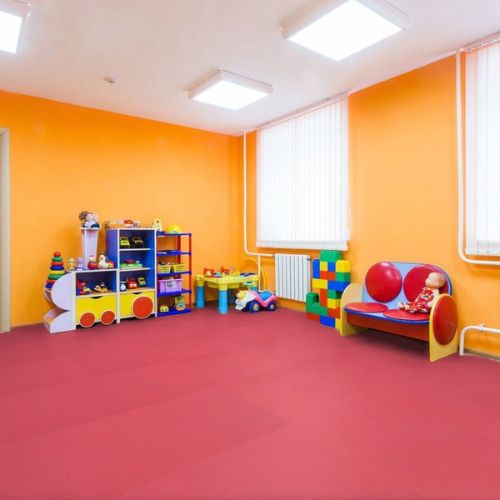
Slip resistance in vinyl flooring is determined more by surface microtexture than by gloss level alone. The microscopic structure of the surface plays a key role in how much friction is generated between the floor and the foot. Matte finishes are generally considered the safest option because they diffuse light and create a slightly rougher surface profile, which improves grip and reduces the likelihood of slipping.
Semi-gloss finishes provide a balance between aesthetics and safety, offering moderate slip resistance, although their performance can decrease when exposed to water, spills, or cleaning agents. Textured vinyl surfaces deliver the highest level of barefoot traction, making them especially suitable for environments such as nurseries where spills are frequent and children are constantly moving.
However, deeper textures can also retain dust, dirt, and liquid residues more easily, increasing maintenance demands. For this reason, selecting the right finish requires balancing safety performance with practical cleaning and long-term hygiene considerations in busy childcare environments.
Phthalate-free and low-VOC certifications for indoor air quality
For children’s spaces, indoor air quality is a key concern. Phthalate-free vinyl avoids certain plasticizers associated with long-term health concerns, while low-VOC certifications ensure reduced chemical emissions after installation. These certifications are especially important in enclosed, air-conditioned environments where air exchange is limited. Products meeting recognized emission standards help maintain healthier indoor environments, particularly in bedrooms and play areas.
How rounded corners on vinyl planks reduce injury from edges
Rounded or beveled plank edges play an important role in improving safety and comfort in active environments such as nurseries and play areas. Unlike sharp square edges, these profiles reduce the presence of hard impact points at plank joints, which is especially important when children are running, crawling, or frequently falling onto the floor.
By softening the transition between individual planks, beveled edges help distribute contact forces more evenly across the surface, lowering the risk of scrapes, bruises, or minor injuries during play. They also contribute to a more forgiving floor feel, which is valuable in spaces where constant movement and unpredictable activity are expected.
From a visual perspective, beveled edges create subtle shadow lines that make the flooring appear more natural and less rigidly segmented, improving overall aesthetics. In addition to safety benefits, this design also helps mask minor installation tolerances and reduces the visual impact of small gaps that may develop over time with regular use.
Stain resistance against markers, paints, and food dyes common in nurseries
Nursery environments are particularly challenging for flooring due to constant exposure to staining agents such as markers, paint, juice, and food coloring. High-quality vinyl flooring is designed with a durable protective wear layer that acts as a barrier against pigment penetration, preventing most spills from reaching the core material.
The effectiveness of stain resistance largely depends on how smooth and tightly sealed the surface is, as these characteristics make it easier to wipe away liquids before they have time to set. In fast-paced nursery settings, quick cleaning is essential to maintaining both hygiene and appearance.
However, despite these protective features, prolonged or repeated exposure to strong dyes can still result in slight discoloration over time, particularly on lighter-colored flooring options where stains are more visible. Regular maintenance and prompt spill management are therefore important to preserve the original look and extend the lifespan of the flooring in high-use childcare environments.
Underlayment cushioning levels for crawling babies and toddlers
Underlayment plays a major role in comfort and safety for crawling children. A moderate cushioning level is ideal—enough to soften impact but still firm enough to support stable movement. Excessively soft underlays can make crawling and walking less stable, while very hard systems offer little protection. The goal is balanced energy absorption rather than maximum softness.
Cleaning protocols that kill germs without damaging vinyl surface
Vinyl floors in nurseries require disinfectants that are effective but non-abrasive. Harsh chemicals or highly acidic cleaners can degrade the protective wear layer over time. Mild, pH-neutral disinfectants are preferred for routine cleaning. Frequent cleaning is important in children’s spaces, but it must be done with materials that preserve surface integrity to maintain long-term durability.
How vinyl surface temperature affects barefoot toddlers in summer
Surface temperature becomes a comfort and safety factor in hot climates. Vinyl tends to stay cooler than materials like stone or ceramic under AC conditions, but can still heat up in sun-exposed zones. In summer environments like Dubai Marina, direct sunlight through glazing can raise floor temperature significantly. Light-colored vinyl generally performs better in reducing heat absorption, improving barefoot comfort for children.
Transitioning nursery vinyl to hallway flooring without trip hazards
Frequently Asked Questions
Is luxury vinyl safe for a baby’s room considering off-gassing concerns?
Yes if phthalate-free and FloorScore or GreenGuard Gold certified; air out room for 48 hours after install.
Which vinyl finish is least slippery when toddlers run with socks?
Textured matte finish with DCOF rating above 0.6; avoid high-gloss entirely for nurseries.
Can vinyl flooring reduce injury severity from a toddler’s fall from a low chair?
Compared to tile, yes by 30-40% impact reduction; compared to carpet, less but easier to clean.
How do I remove permanent marker from vinyl flooring without chemicals?
Hairspray on cloth, then soapy water; test in closet first; works for 90% of markers.
Does vinyl flooring attract dust and allergens like carpet does?
No, vinyl is hypoallergenic and doesn’t harbor dust mites; weekly mopping removes all allergens.
What thickness of underlayment is best for a home nursery?
3-5mm high-density foam; thicker underlayment causes unstable plank connection under toddler weight.
How often should I deep-clean nursery vinyl to prevent germ buildup?
Daily spot cleaning; full disinfectant mopping weekly; steam mop monthly if manufacturer allows.
Does dark vinyl hide toddler messes better than light vinyl?
Medium tone with speckled pattern hides both stains and dust; solid dark shows every crumb.
Can I install vinyl in a nursery above a parking garage with noise issues?
Yes, add 5mm acoustic rubber underlayment to reduce impact noise from below.